AM decoding
AM decoding with SDR involves using a software-defined radio to receive and process amplitude-modulated signals, extracting the original audio information from radio broadcasts.
Introduction
Amplitude modulation (AM) encodes audio onto a carrier wave by varying its amplitude while keeping frequency constant. A typical AM signal looks like a high-frequency carrier with the audio waveform “riding” on its peaks, often visualized in SDR software as a spectrogram or IQ plot.
Decoding AM
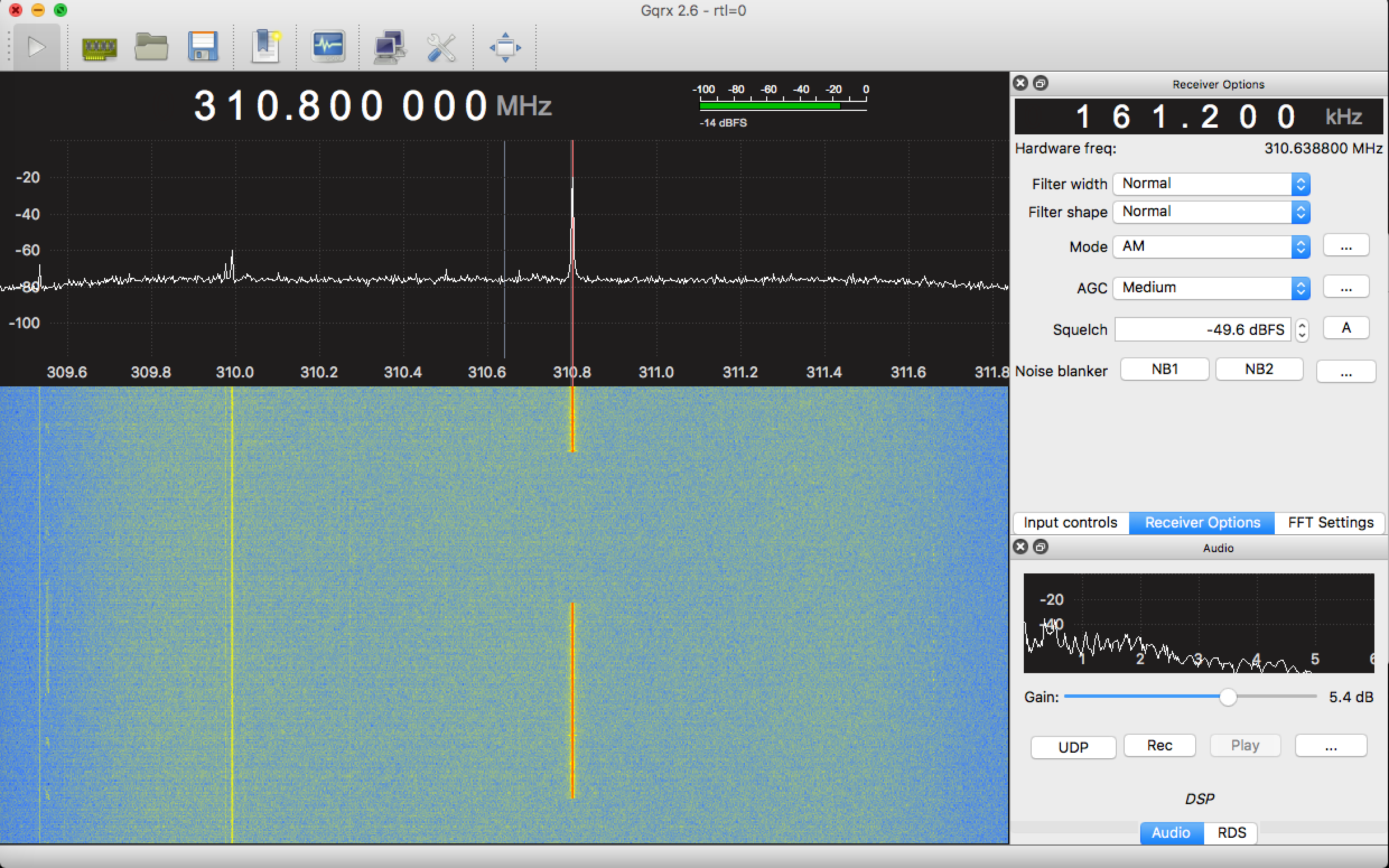
To decode, SDR software tunes to the AM frequency, applies a demodulator (like envelope detection), and outputs audio. Steps include: tune receiver, apply AM demod block (e.g., in GNU Radio or SDR#), filter noise, and downsample for playback at rates like 8 kHz. The result is clear audio from stations like medium-wave broadcasts.
(source: stanford.edu)
Quick tutorial
- run
gqrxsoftware defined radio - set center frequency to one around
388 MHzor any other AM band - select
AMdecoding mode